Australia's Black History
Written in consultation with Nyangbal Elders
A Truth Telling
A white artists’ depiction of one of the many massacres the British perpetrated against the Aboriginal people of Australia.


A Wise People
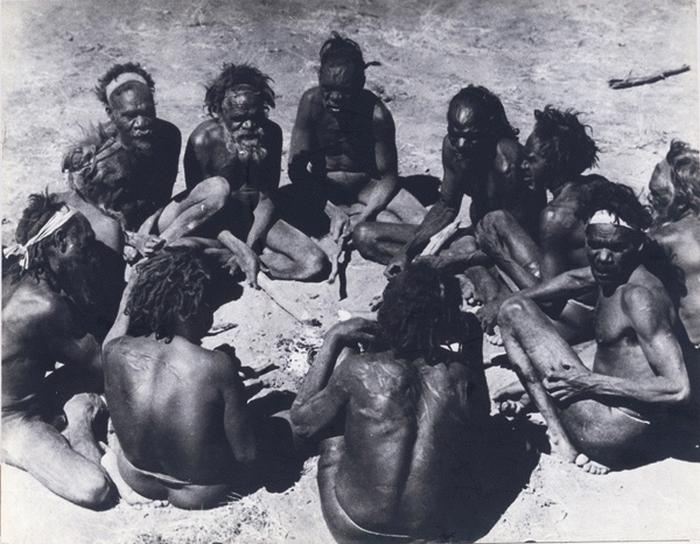
Aboriginal Elders talking over issues in a talking circle (a hierarchy-less structure), solving problems with diplomacy rather than violence.
A Buried Past

Aboriginal people rounded up and removed from their land to be relocated into Missions by white settlers.
‘History is a pack of lies, as any fool can tell’
We have been lied to. The British settlement of Australia, taught in schools, is a white-washed version of the history of Australia. Australia’s history is not 200 years old; it is ancient.
The story of the Nyangbal people of Bullinah is the story of every Imperialist Power’s justification of their invasion of a less powerful nation. It is a timely reminder that violence and greed can only end in the destruction of the human species.
The stories use the Australian context to question the foundations of modern civilisation. The stories are a Postcolonial truth telling of the British settlement of Australia, told through the eyes of Aboriginal characters.
The Aboriginal people of Australia are descendants of the oldest continuing civilisation on the planet, one that is 80,000 years old. They value diplomacy and peace. Their currency is respect.
The British people are descendants of an Empire less than 1,000 years old. They value power and war; their currency is greed and violence.
An Advanced Culture
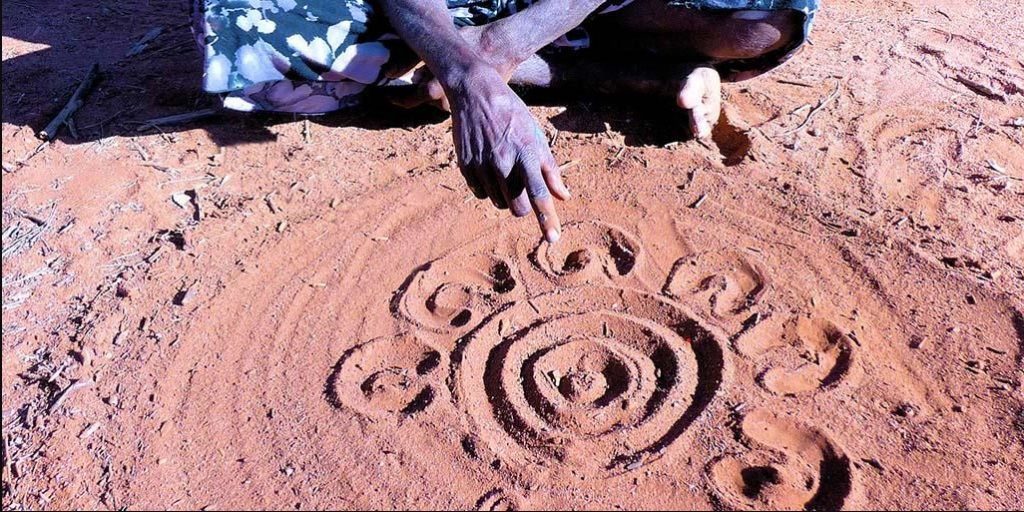
Aboriginal people communicated orally and visually. An Aboriginal woman draws a universally recognised symbol for people at a meeting place, like a campfire or a talking circle.
A Blueprint for Peace
The books contrast the values of these two cultures, in a retelling of the settlement of Ballina, to explain why all of us find ourselves living in a world that is on the brink of destruction.
The series identifies the root causes behind the wars today and provides a blueprint based on the wisdom of the Aboriginal people, for a healthy, peaceful, and sustainable way of living on this planet into the future.


Prefer a bookshop? We’ve got you covered.
Bookshops
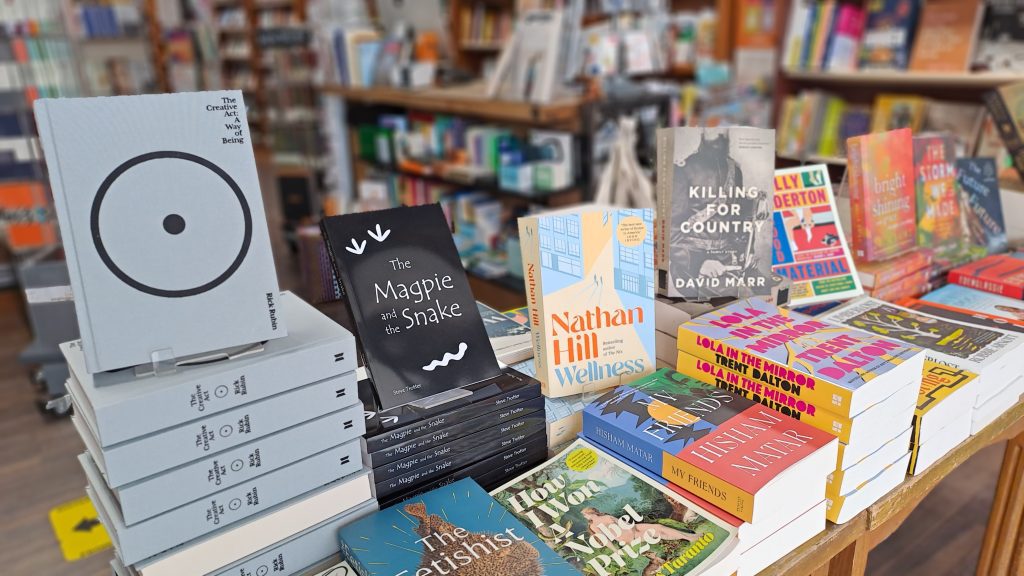
- The Book Room Byron Bay
- The Book Room Lennox Head
- Ballina Visitor Information Center
- Can’t see your book shop? No problem. Books can be ordered through any bookshop.
